Orchid Fertilizer: What to Use, How Often, How Much
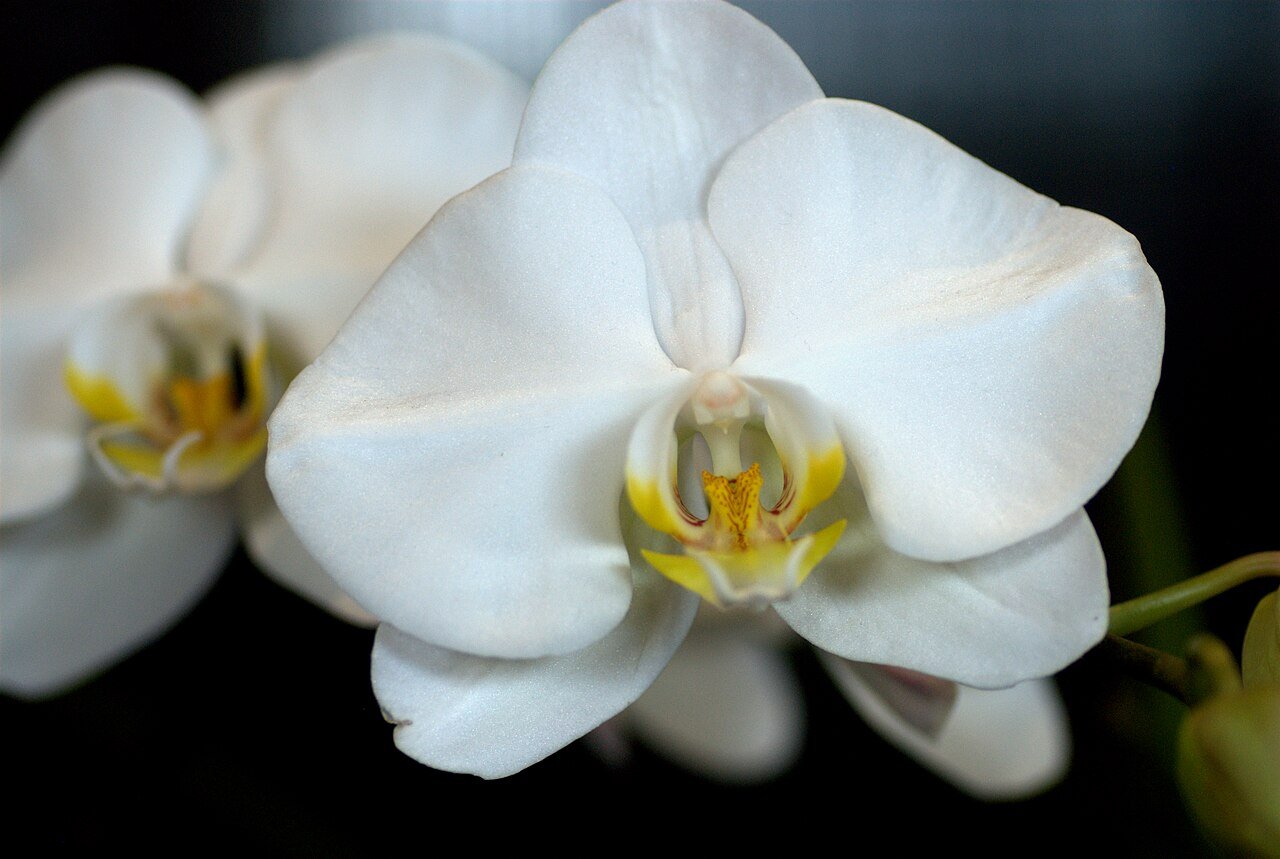
The right orchid fertilizer matters less than how you use it. Most struggling orchids get too much feed, not too little. A moth orchid grows in loose bark that holds almost no food, so it needs a small, steady dose and nothing from the kitchen. Everything here applies to Phalaenopsis, the orchid sold in most stores. Other genera follow the same logic but can differ in detail.
Use an orchid fertilizer or a balanced houseplant fertilizer diluted to half-strength, once a month while the orchid puts out new leaves or roots. Pour it over damp bark and let it drain. Coffee grounds are not a fertilizer. They hold water in the bark and grow mold, and the little nitrogen they hold is released too slowly and unevenly to feed an orchid.
How to Choose the Best Orchid Fertilizer
Any orchid fertilizer or general houseplant fertilizer works when you dilute it correctly, according to the University of Wisconsin Extension. The label matters more than the brand.
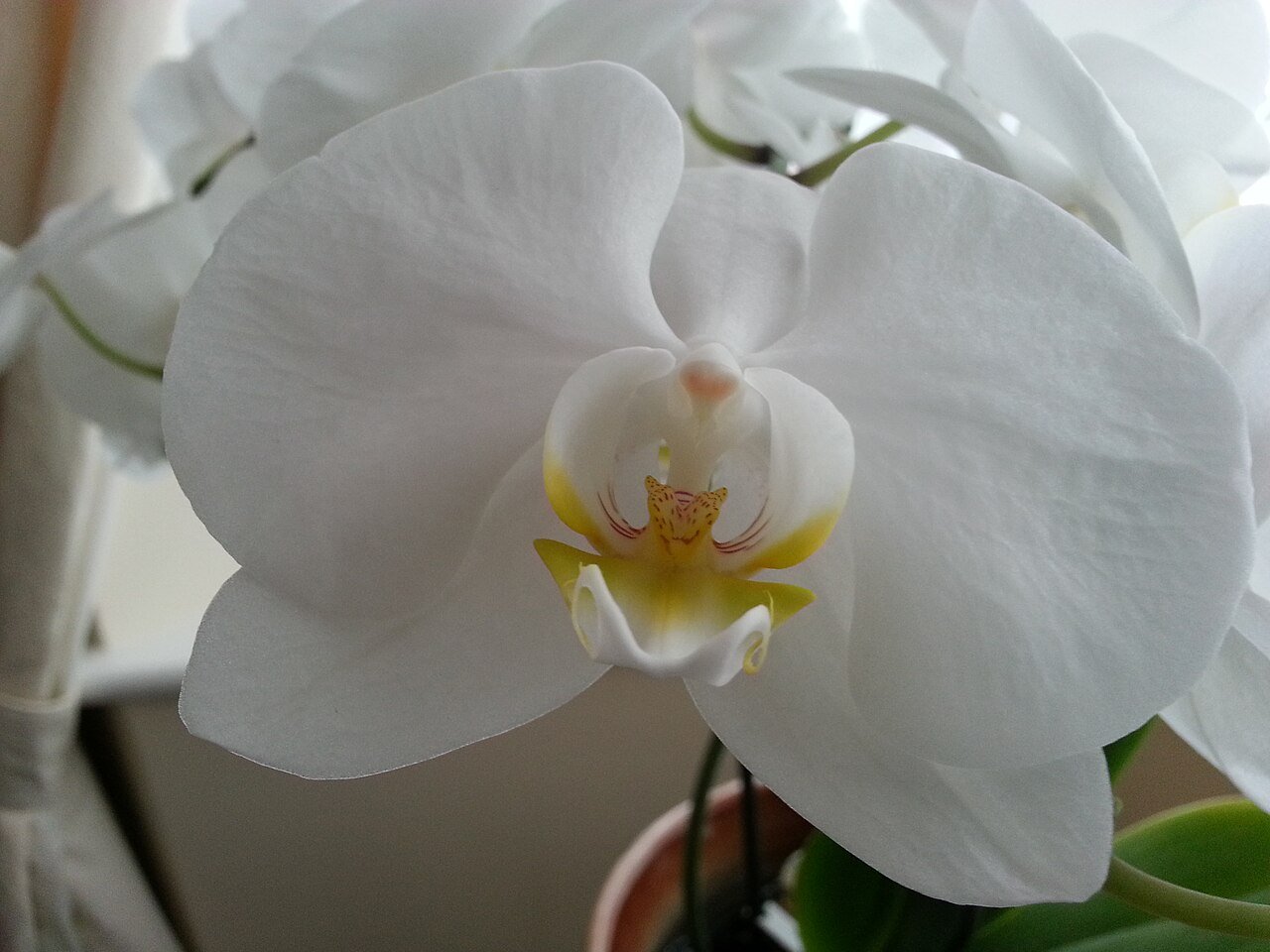
For houseplants, University of Illinois Extension recommends a 1:2:1 ratio such as 5-10-5 or 10-20-10, and a balanced 10-10-10 also works. Bloom formulas carry the higher middle number. They do not force a spike on a plant that lacks light. Bark-mix formulas are sold for orchids potted in fresh bark. Pick a urea-free, low-salt label when you have the choice. Every feed leaves some salt behind, and less salt means less buildup in the pot.
| Product type | What the label shows | Best use |
|---|---|---|
| Balanced orchid liquid | Even numbers such as 10-10-10 | Base feed during active growth |
| Bloom booster | Higher middle number, such as 10-20-10 | Mature plant you want to rebloom |
| Bark-mix formula | Marked for orchids in bark | Plants potted in fresh bark |
| General houseplant liquid | Balanced or 1:2:1 ratio | Backup when no orchid feed is at hand |
| Coffee grounds | No guaranteed analysis | Not recommended |
How Often to Fertilize Orchids
Feed once a month while the orchid is actively growing. That is the UW Extension schedule for orchids at half-strength. Active growth means a new leaf, fresh green root tips or a flower spike.
Stop when growth stops. Illinois Extension advises feeding only while a plant is actively growing, so a resting orchid gets plain water. Give a freshly repotted orchid a break too, until new roots appear in the bark. Every 4 to 6 months, flush the pot with plain water to wash out salt buildup.
How to Dilute and Apply Orchid Fertilizer
Mix the fertilizer at half the label strength and pour it onto bark that is already damp. Never use a stronger mix than the label recommends. Fertilizer on dry roots can burn them, and too much fertilizer burns roots.
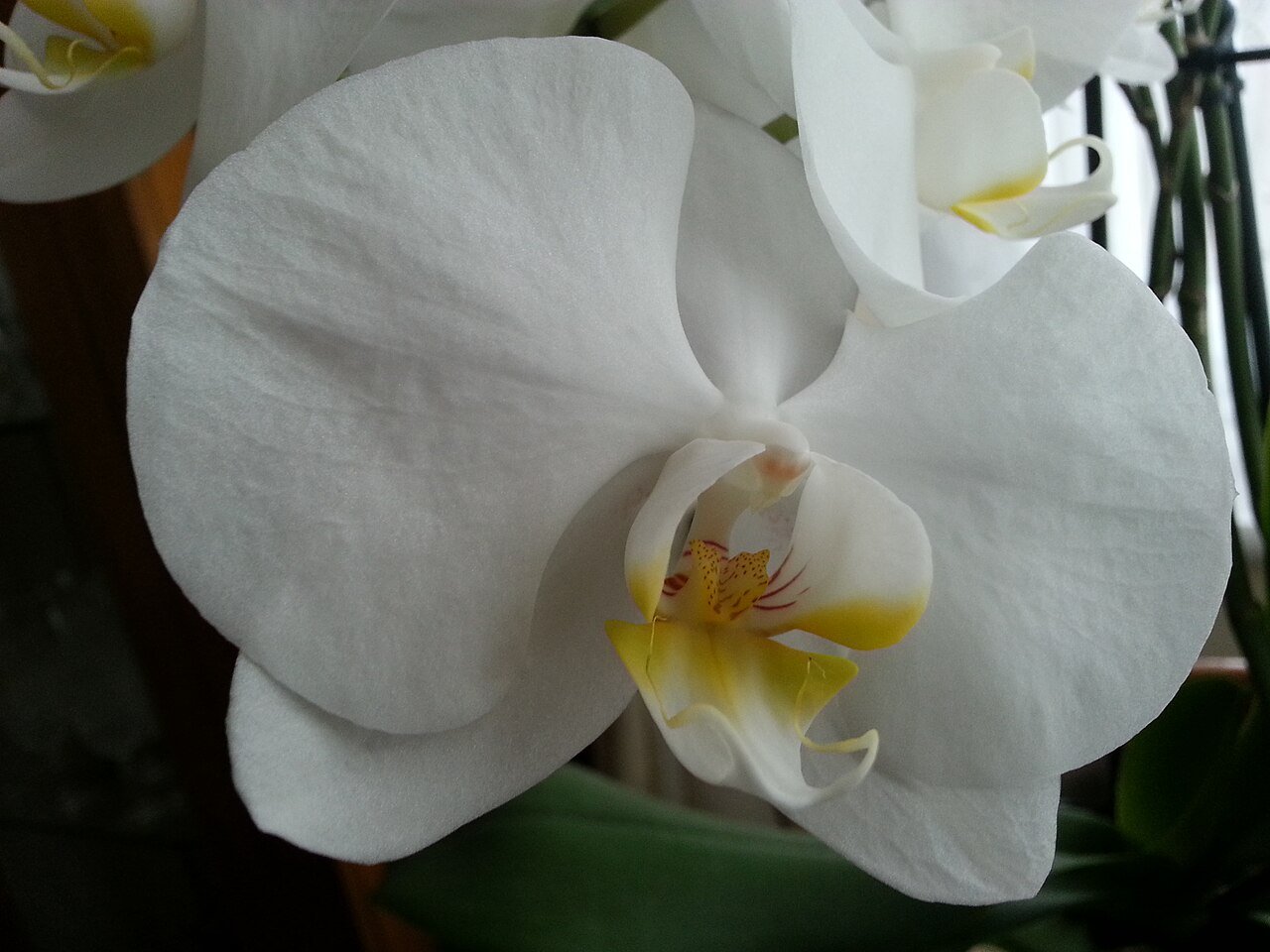
Water the orchid with plain water first. Wait a few minutes, then pour the diluted feed slowly through the bark until it runs out of the drainage holes. Let the pot drain fully. Orchids must not sit in water, because they are prone to root rot.
Leaf Comfort Tip If you mix fertilizer with tap water, let the water stand for at least 24 hours first so free chlorine can evaporate.
Watch for fertilizer burn. A white crust on the bark or the pot rim is salt. Root tips turn brown and dry, and leaf tips look scorched. Flush the pot with plain water and skip the next feed.
Kitchen remedies do not belong in the pot. Coffee grounds and tea bags add little and stay wet in the bark, where mold grows. Baking soda adds sodium, not nutrients. Cola does not help orchids grow. Its sugar feeds mold and draws pests, and its acid adds nothing the roots can use.
Related reading: Orchid Care.
Related reading: how to get an orchid to rebloom.
Frequently Asked Questions
Are used coffee grounds good for orchids?
No. Wet grounds sit in the bark, hold water around the roots and turn moldy. Heavily diluted cold coffee carries only traces of nitrogen and no reliable dose, so it cannot replace a diluted orchid fertilizer.
Are tea bags good for orchids?
No. Brewed and cooled tea does not replace fertilizer. Damp tea leaves left in the pot encourage fungus on the bark and roots.
What does baking soda do for orchids?
Baking soda supplies none of the three main nutrients, nitrogen, phosphorus and potassium. It raises the sodium level in the pot, and sodium can dry out orchid roots. Keep it off the plant.
Sources
- University of Wisconsin Extension, Orchids
- University of Wisconsin Extension, Houseplant Care
- University of Illinois Extension, Houseplant Care